






The Renewal That Stunned a Credit Union CEO, and Why Your SMB Could Be Next
When healthcare costs rise 20%, 30%, or more, raising deductibles and employee contributions isn’t much of a solution. Employers need a different approach.
For Kevin Cole, who runs Mid Oregon Credit Union, the 2027 health insurance outlook was a shock.
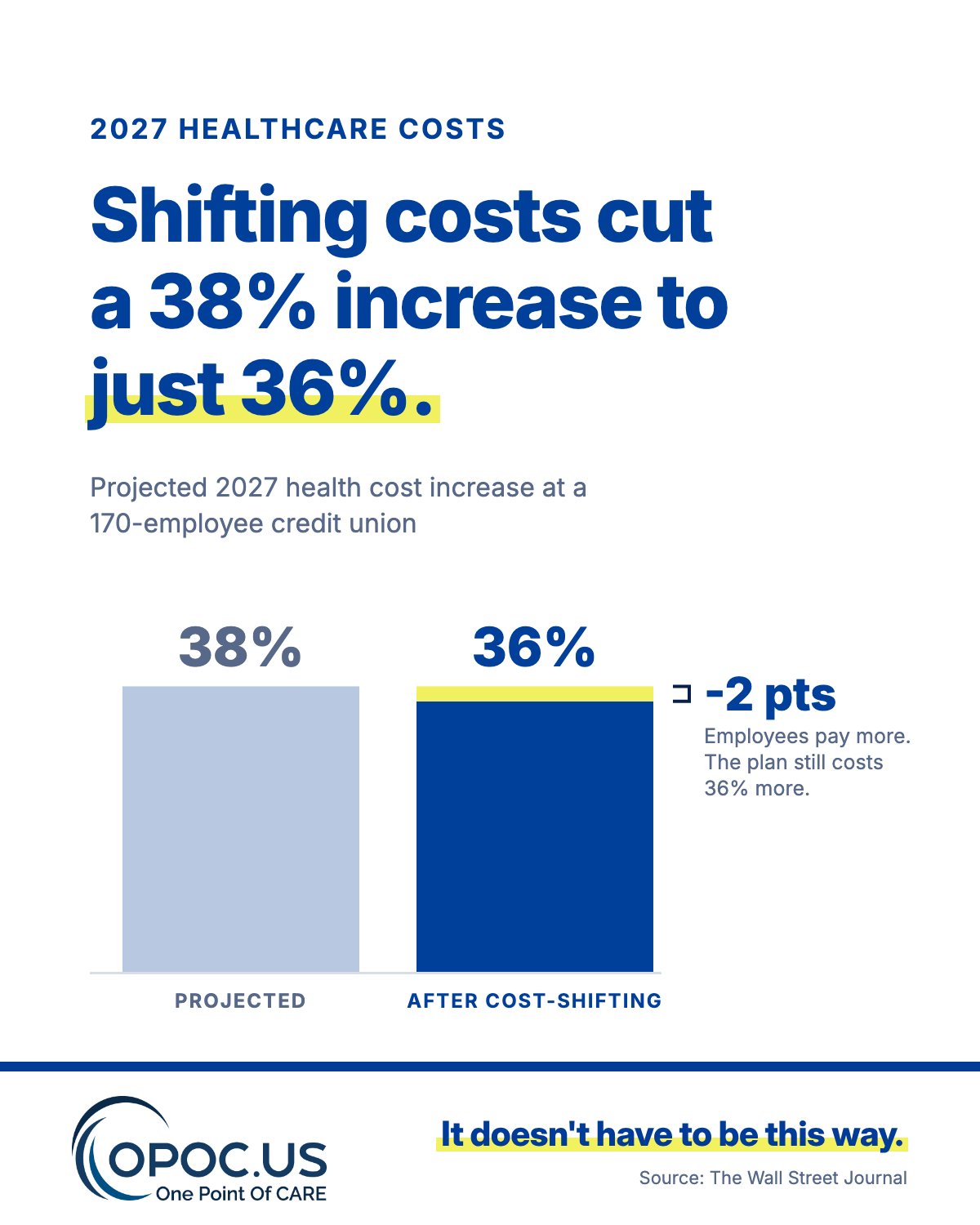
The credit union has approximately 170 employees, and its projected healthcare cost increase for 2027 was 38%.
As reported by The Wall Street Journal, Cole responded with options familiar to many employers: increasing employee premium contributions, raising deductibles, and adding a high-deductible health plan.
Those changes were expected to reduce the projected increase by approximately two percentage points: From 38% to 36%.
Employees would pay more of the expense, and the organization would still face an extraordinary increase. The problem was how little the traditional cost-control options could accomplish.
In this article:
Another Employer, the Same Difficult Choices
Cerebral Brewing in Denver faced a similar challenge.
With approximately 50 employees, the brewery was budgeting for a 20% increase in health insurance costs following its July renewal. Meanwhile, other business expenses, including aluminum and fuel, were rising.
To keep employee premiums manageable, the brewery moved toward higher-deductible plans, including an option with a $6,000 individual deductible. Employees could pay less than $100 per paycheck for that plan, and the brewery contributed a $50 monthly health stipend.
It’s a reasonable attempt to balance affordability with financial reality. But a lower premium can come with greater out-of-pocket exposure when employees need care.
And that’s the major trade-off facing employers across the country: How do you control health insurance costs without making healthcare less affordable for your employees?
The Numbers Tell the Same Story
According to the 2026 KFF Employer Health Benefits Survey, the average annual premium for employer-sponsored family health coverage reached $28,303, a 5% increase over 2025. Employees contributed an average of $7,471 toward those family premiums, up 9% from the previous year.
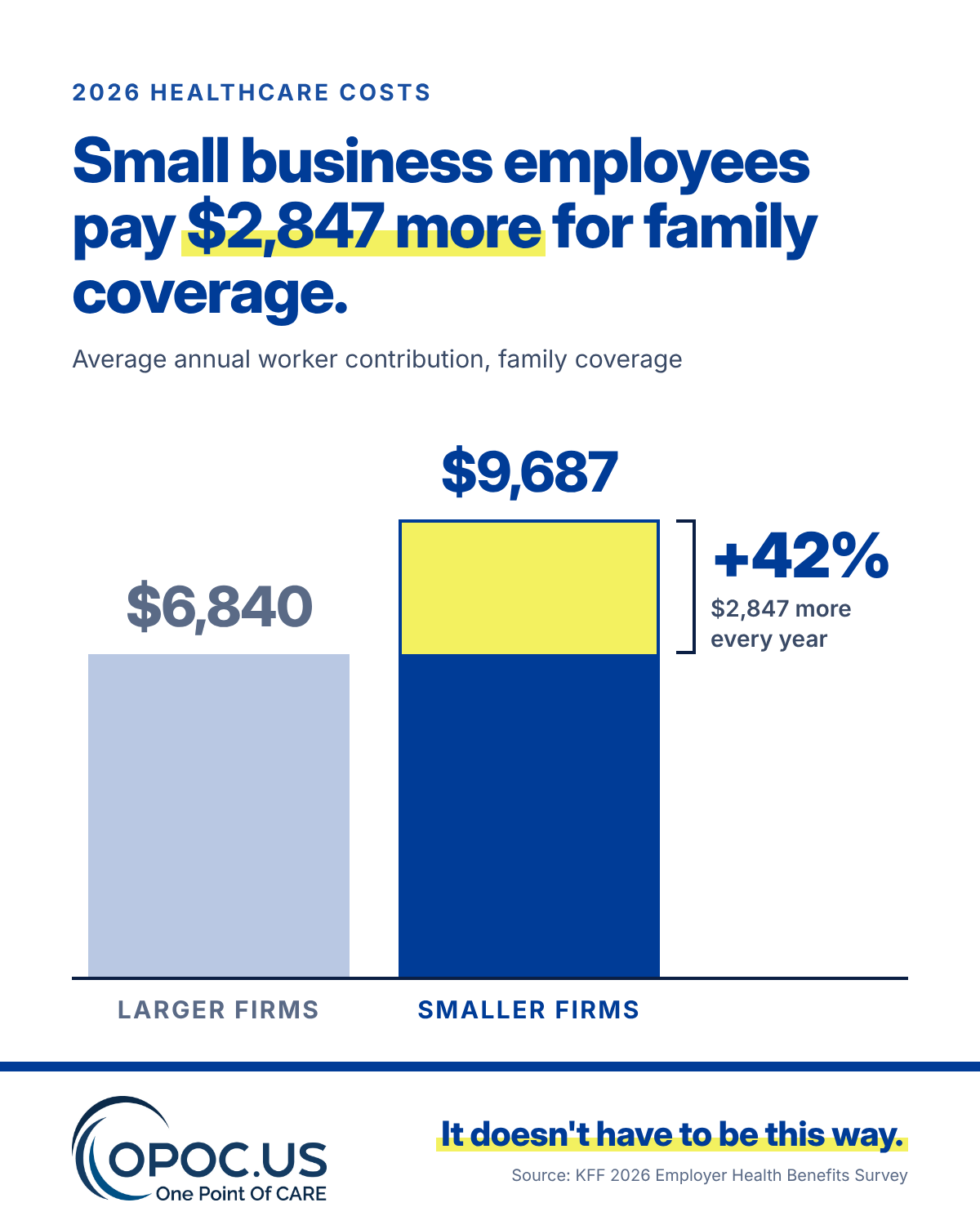
The pressure is particularly significant for smaller employers. KFF reports that workers at companies with 10 to 199 employees contribute an average of $9,687 annually toward family coverage, compared with $6,840 at larger employers.
For employers, healthcare costs continue to climb, and the familiar responses aren’t addressing what’s driving them.
Shifting Costs Isn’t the Same as Controlling Costs
When health insurance costs increase, employers typically have a handful of options:
- Increase employee premium contributions.
- Raise deductibles and copayments.
- Introduce lower-premium, high-deductible plans.
- Reduce employer contributions toward coverage.
These decisions can reduce the employer’s immediate financial burden, but they don’t necessarily reduce the underlying cost of healthcare.
Shifting costs isn’t the same as controlling costs.
The health plan still costs more. The employer has simply changed who pays and how much. And higher employee contributions can create unmanageable financial burden for the employees and additional challenges for recruitment and retention.
What If Employers Challenged the Cost Instead?
Healthcare costs are complicated, but that doesn’t mean employers don’t have options. Hospital pricing, prescription drug spending, provider networks, claims management, and the structure of a health plan all affect what employers ultimately pay.
Yet many employers approach their benefits the same way every year: receive a renewal, compare a limited set of options, adjust employee contributions, and sign for another year.
There’s a different approach that looks beyond the renewal number.
That means examining what’s driving healthcare spending, and helping employees make more informed healthcare decisions. It also means managing healthcare costs year-round, not just an annual negotiation.
How OPOC Approaches Healthcare Costs Differently
For more than 25 years, OPOC.us has helped small and midsize businesses challenge the traditional approach to employee benefits.
Rather than simply negotiating a renewal or shifting more costs to employees, OPOC focuses on managing the underlying drivers of healthcare spending.
Through its One-Point-of-CARE™ approach, OPOC combines strategic benefits planning, healthcare cost management, and dedicated PersonalCARE Advocates™ who help employees and their families navigate healthcare.
That includes helping employers evaluate plan structures and spending, while giving employees personal support with claims, prescription costs, provider options, and other healthcare challenges.
The goal is to find opportunities to reduce spending while protecting the quality and value of employee benefits.
OPOC clients have achieved average first-year healthcare savings of 11% with many keeping per-employee medical spend flat for a decade, despite 10–15% annual market increases. Actual results vary by employer and plan.
It’s a different philosophy: rather than accepting rising costs as inevitable and deciding who should pay more, ask how those costs can be managed more effectively.
There’s a Better Goal Than Making a 38% Increase Slightly Smaller
Mid Oregon Credit Union and Cerebral Brewing illustrate the difficult choices facing employers today.
Both organizations were trying to manage substantial healthcare cost increases while balancing the financial needs of their businesses and employees. But their experiences raise a bigger question for every employer:
What if the goal wasn’t simply to make the increase more manageable, but to challenge the increase itself?
That’s the conversation OPOC believes more employers should be having.
Don’t just accept rising healthcare costs. Challenge them.
Whether you’re evaluating your current benefits strategy or planning for the future, a second opinion can help you understand your options and identify opportunities to control healthcare spending.
Get a Second Opinion with OPOC.us
Sources: The Wall Street Journal; KFF, 2026 Employer Health Benefits Survey. OPOC client results vary by employer and plan.